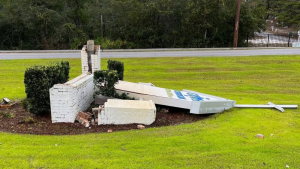


Professional sign installers use different tools depending on the sign, mounting surface, installation height, electrical scope, and property conditions. Common sign installation tools include laser levels, measuring equipment, hammer drills, impact drivers, specialized drill bits, mounting hardware, lifting equipment, and electrical testing devices.
A storefront channel-letter installation may require very different equipment from a monument sign, pylon sign, or digital display. The goal is not simply to have more tools, but to select equipment that fits the sign and the approved installation method.
Quick Summary
- Measuring and layout tools help establish sign position, spacing, and mounting locations.
- Drills, bits, fasteners, and anchors vary based on the mounting surface and sign requirements.
- Elevated installations may require bucket trucks, boom lifts, scissor lifts, or other appropriate access equipment.
- Electrical signs may involve testing, wiring, and conduit tools handled according to the project’s electrical scope.
Written by the Vintage Sign & Light Team
At Vintage Sign & Light, we design, fabricate, install, repair, and maintain commercial signage throughout Northwest Florida. Our installation planning considers the sign type, property conditions, mounting surface, access, electrical requirements, and equipment needed for the project. Businesses planning a commercial installation can also review our commercial sign installation services.
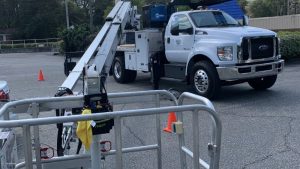
Why Do Professional Sign Installation Tools Matter?
Professional sign installation tools help installers measure accurately, work with different surfaces, position signage, access elevated areas, and complete project-specific fastening or electrical tasks.
The correct equipment depends on the sign and property. Building construction, mounting conditions, sign dimensions, structural requirements, installation height, electrical scope, and site access can all influence the installation plan.
For example, mounting dimensional letters to a commercial building requires a different set of tools from installing a freestanding monument sign that involves excavation, foundations, lifting equipment, and structural components.
What Measuring and Layout Tools Do Sign Installers Use?
Measuring and layout tools help installers establish the location, spacing, dimensions, and alignment of a commercial sign before mounting begins. The specific tools depend on the sign and installation conditions.
Laser Levels and Alignment Tools
Laser levels project reference lines across walls and other surfaces to help installers position signage consistently.
Measuring tapes, chalk lines, templates, and other layout tools may also be used to establish spacing and mounting locations before drilling or fastening begins.
These tools are particularly useful for projects such as channel letter signs, where individual letters need to follow an approved layout.
Surface Detection Tools
Surface-detection tools can help identify framing or other conditions behind certain wall systems.
The appropriate mounting point and attachment method still depend on the building construction, sign weight, approved installation details, and actual site conditions.
Common Measuring and Layout Tools
| Tool | Typical Use | What It Helps With |
| Laser level | Establishing reference lines | Alignment and positioning |
| Measuring tape | Confirming dimensions and spacing | Layout |
| Chalk line | Marking longer reference lines | Consistent positioning |
| Templates | Transferring approved layouts | Letter or mounting placement |
| Surface detector | Identifying certain conditions behind walls | Installation planning |
The installer may also use project drawings, patterns, field measurements, or digital layout information depending on the sign.
What Drilling and Fastening Tools Are Used for Sign Installation?
Drilling and fastening equipment varies with the mounting surface, sign construction, and approved attachment method.
Masonry, structural framing, metal panels, wood, and other building materials do not necessarily use the same drill bits, anchors, or fasteners.
Hammer Drills and Impact Drivers
Hammer drills are commonly used for certain concrete and masonry applications when drilled mounting points are part of the installation method.
Impact drivers may be used with compatible fasteners depending on the hardware, substrate, and project requirements.
Standard drills may also be appropriate for other installation tasks. The tool should match the material being worked on rather than being selected simply because it is more powerful.
Anchors, Bolts, and Mounting Hardware
Mounting hardware is selected based on factors such as:
- Sign construction
- Sign weight
- Mounting surface
- Supporting structure
- Project-specific engineering
- Installation location
- Approved mounting details
Depending on the project, hardware may include anchors, bolts, screws, rivets, brackets, posts, raceways, or other components. The appropriate attachment method should come from the actual project requirements rather than a one-size-fits-all hardware list.
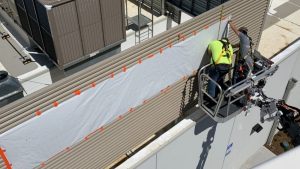
What Equipment Is Used for Elevated Sign Installation?
Commercial signs installed above ground level may require specialized access equipment. Depending on the property and sign location, installers may use:
- Bucket trucks
- Boom lifts
- Scissor lifts
- Ladders
- Other appropriate access equipment
The selection depends on installation height, horizontal reach, available working space, ground conditions, property access, and the work being performed.
For example, a boom lift can provide both vertical and horizontal reach when access directly beneath a sign is limited. A scissor lift primarily provides vertical access and may be appropriate for other working conditions.
OSHA requires employers using aerial lifts to assess worksite hazards, select appropriate equipment, provide applicable training and protective equipment, and follow safe work practices.
Fall Protection and Elevated Work
Elevated work can involve additional safety requirements depending on the equipment and conditions.
Fall-protection systems, equipment inspections, stabilization, positioning, and worker training may all be relevant. The applicable requirements depend on the type of access equipment and work being performed.
What Electrical Tools Are Used for Illuminated Signs?
Illuminated channel letters, sign cabinets, and digital displays may involve electrical work as part of the installation.
Depending on the project, qualified personnel may use tools such as:
- Voltage testers
- Multimeters
- Wire strippers
- Crimping tools
- Insulated hand tools
- Conduit tools
- Cable-management equipment
The electrical scope depends on the sign, existing electrical conditions, project design, and applicable requirements.
Voltage Testing and Electrical Work
Electrical test equipment can be used by qualified personnel to evaluate electrical conditions and verify specific circuits or components.
OSHA requires safety-related work practices when employees work near or on equipment or circuits that may be energized, including requirements related to deenergizing and verification.
Electrical troubleshooting or connections should therefore be handled according to the approved project scope and applicable safety requirements.
Conduit and Cable Management
Certain illuminated signs may require conduit, wiring, or cable-management work.
Conduit benders and related tools can help route electrical components based on the project design and property conditions. Before installation, the business and sign company should clarify who is responsible for the electrical portion of the project.
What Surface Preparation Tools May Be Needed?
Surface preparation depends on the sign, mounting method, substrate, and existing conditions.
Before installation, crews may need to remove debris, prepare mounting areas, clean compatible surfaces, or address loose material that affects the planned installation.
Possible tools and supplies include:
- Appropriate surface cleaners
- Brushes or pads
- Scrapers
- Application tools
- Sealant equipment
- Manufacturer-approved preparation materials
Preparation should match the materials involved rather than follow one process for every building surface.
Sealants and Finishing Supplies
Sealants may be used around certain penetrations or mounting areas when appropriate for the installation method.
The sealant and application should be compatible with the building material, mounting system, and project requirements.
What Tools Are Used for Storefront Graphics?
Some commercial sign projects include window lettering, storefront graphics, or interior vinyl.
Installers may use:
- Squeegees
- Application tape
- Cutting tools
- Heat tools
- Measuring equipment
- Surface-preparation materials
These tools help position and apply lettering or graphics according to the material and application requirements.
The process is different from mechanically mounting channel letters or installing a freestanding sign, which is another reason professional sign installation does not rely on one standard toolbox.
How Do Tool Requirements Change by Sign Type?
The tools used should follow the installation conditions.
| Installation Condition | Tools or Equipment That May Be Used |
| Building-mounted letters | Measuring tools, drills, fasteners, templates, and access equipment |
| Masonry mounting | Masonry-compatible drilling and fastening equipment |
| Elevated installation | Bucket truck, boom lift or other appropriate access equipment |
| Illuminated signage | Electrical testing and wiring tools |
| Freestanding signage | Excavation, lifting, leveling and foundation equipment |
| Storefront graphics | Application, cutting and surface-preparation tools |
Even within the same sign category, two properties may require different equipment because of height, access, construction, or mounting conditions.
What Tools Are Used for Monument, Post, and Pylon Signs?
Freestanding signage may require a different installation setup from building-mounted signs.
Projects involving monument signs or pylon signs can involve:
- Excavation equipment
- Augers
- Leveling tools
- Bracing
- Concrete or foundation equipment
- Lifting equipment
- Structural components
- Electrical tools when illuminated
Foundation dimensions, embedment, structural support, and installation methods should follow the approved project requirements, site conditions, applicable engineering, and local requirements. There is no single footing depth or foundation design that applies to every freestanding sign.
What Tools Are Used in Tight or Restricted Spaces?
Some installation areas provide limited working room. A sign may be positioned near architectural features, neighboring tenant spaces, landscaping, glass, awnings, or other obstructions.
Installers may use compact drills, angled drivers, smaller hand tools, specialized bits, or different access equipment when working in restricted areas.
A professional sign site survey can help identify access and mounting conditions before the installation plan is finalized.
How Are Sign Installation Tools Maintained?
Installation tools and equipment should be inspected and maintained according to their condition, intended use, and manufacturer guidance.
Worn drill bits, blades, batteries, cords, fasteners, or other components may need service or replacement when they no longer perform as intended.
Access equipment and electrical testing devices can have their own inspection and maintenance requirements.
Tool condition is part of installation planning because equipment should be suitable for the work it is being used to perform.
Why Do the Right Tools Depend on the Installation?
Different materials and mounting conditions require different approaches. Concrete, masonry, metal framing, glass, wood, freestanding structures, illuminated signs, and digital displays do not all use the same tools or hardware.
For example, drilling into masonry requires different equipment than mounting channel letters to a framed commercial wall. Installing a Watchfire digital display may also involve electrical components, supporting structures, access equipment, and setup requirements beyond the tools needed for a non-illuminated wall sign.
The installer should select tools, access equipment, fasteners, and other components based on the actual sign and property conditions.
How We Plan Commercial Sign Installation
At Vintage Sign & Light, we plan installation around the sign type, property conditions, mounting surface, approved project requirements, access, electrical scope, and equipment needs.
Depending on the project, this may involve measuring and layout tools, mounting equipment, aerial access, electrical tools, excavation equipment, lifting equipment, or specialized hardware.
Our installation team coordinates placement, mounting, electrical components, and final setup according to the approved project requirements.
Businesses can review our commercial sign installation services for more information about the overall process.
Commercial Sign Installation in Northwest Florida
Vintage Sign & Light is based in Valparaiso and provides commercial sign installation throughout Northwest Florida.
We serve commercial projects across Okaloosa, Walton, Santa Rosa, Escambia, Bay, Holmes, Jackson, and Washington counties. Installation requirements can vary depending on:
- Property conditions
- Sign type
- Mounting location
- Jurisdiction
- Electrical scope
- Structural requirements
- Equipment access
- Existing signage
Rather than assuming the same installation approach applies everywhere, we evaluate the requirements of the specific project. Businesses can also review our Northwest Florida service area.
FAQs
Can basic hand tools handle commercial sign installation?
Basic hand tools may be part of an installation, but many commercial projects also require specialized measuring, drilling, fastening, access, lifting, or electrical equipment. The tools needed depend on the sign and property rather than whether a tool is considered “professional” or “DIY.”
Do commercial sign installations require permits?
Permit requirements depend on the sign, property, scope of work, and jurisdiction. Before installation begins, confirm whether a permit applies and who is responsible for coordinating any required documentation or submittal.
What tools are used to install signs on brick or masonry?
Masonry installations may involve hammer drills, masonry-compatible bits, measuring tools, and project-specific anchors or fasteners. The actual attachment method depends on the sign, masonry condition, approved mounting details, and structural requirements.
How do professionals reduce the risk of installation damage?
Installers evaluate the mounting surface, sign requirements, access conditions, hardware, and installation method before beginning work. Appropriate measuring, drilling, fastening, lifting, and finishing tools can help reduce avoidable installation errors, but the exact approach depends on the project.
Expert Tip
When planning a commercial sign installation, take a wide photograph showing more than just the proposed sign location.
Include the parking area, landscaping, awnings, neighboring structures, and the route installation equipment would use to reach the building. That wider view can reveal access conditions that are easy to miss in a close-up photograph.
The Right Installation Tools Depend on the Sign and Property
Professional sign installation can involve measuring tools, drills, fasteners, lifting equipment, electrical testing devices, excavation equipment, and specialized access equipment. The exact combination depends on the sign, mounting surface, height, supporting structure, electrical scope, and property conditions. The important part is not simply having more tools. It is selecting equipment and installation methods appropriate for the actual project.
At Vintage Sign & Light, we provide commercial sign installation throughout Northwest Florida and coordinate our work according to the approved project requirements. If you are planning a new sign or replacing existing signage, review our commercial sign installation services or request a quote with your property address, photos, and available project information.