

The main benefits of outdoor LED signs include stronger visibility, flexible messaging, year-round advertising, and better control over what customers see. Local businesses can use these digital displays to promote services, announce events, share current offers, and reinforce their brand without replacing an entire sign whenever the message changes.
Outdoor LED signage works best when the display fits the site, viewing distance, local sign code, and intended audience. Brightness, message design, structural support, electrical access, warranty coverage, and content planning all affect the sign’s long-term value.
Quick Summary
- Outdoor LED signs can display changing text, graphics, schedules, promotions, and public information.
- High brightness and strong contrast can improve visibility in daylight, at night, and from passing traffic.
- LED technology may reduce lighting energy use and replacement needs compared with older lighting systems, but actual savings depend on the display.
- Local sign codes, viewing distance, pixel pitch, installation conditions, and warranty coverage should guide the buying decision.
Written by the Vintage Multimedia Team
Vintage Sign & Light is a veteran-owned, family-operated sign company with more than 50 years of signage expertise. The company provides custom sign design, manufacturing, installation, maintenance, repair, and Watchfire digital display services across Northwest Florida and other approved project locations.
Why Do Outdoor LED Signs Matter to Local Businesses?
Outdoor LED signs help local businesses communicate with people who already pass their location. Instead of relying only on online ads, mailers, or static signs, a business can present timely messages at the point where customers may act.
A restaurant can promote a lunch special before noon. A medical office can show updated hours. A retail store can announce a weekend sale. A school, church, marina, gas station, or community facility can share changing events without ordering a new printed panel.
This direct access to passing traffic gives local businesses more control over their physical brand presence. It also turns the sign into an active communication tool rather than a fixed identification marker.
Outdoor LED displays are often called electronic message centers, or EMCs. The International Sign Association defines an EMC as a sign that displays words, symbols, figures, or images that can change through remote or automatic controls.
What Are the Main Benefits of Outdoor LED Signs?
Outdoor LED signs combine visibility, content control, and long-term usefulness. Their value does not come from brightness alone. It comes from the ability to present clear messages to the right audience at the right time.
1. Strong Visibility in Outdoor Environments
A properly selected LED display can remain readable across changing outdoor conditions. Daylight brightness, strong contrast, and automatic nighttime dimming help adapt the display to its surroundings.
This matters in Florida, where direct sunlight, glare, rain, traffic speed, landscaping, and viewing angles can affect readability. The display must provide enough contrast to stand out without creating excessive glare.
Good visibility also depends on:
- Sign placement
- Display size
- Letter height
- Pixel pitch
- Viewing distance
- Road speed
- Background contrast
- Message length
- Daytime and nighttime brightness settings
A bright display does not automatically create better visibility. Poor contrast, small text, crowded graphics, or a weak viewing angle can make an expensive sign difficult to read.
The International Sign Association recommends that an electronic message center’s nighttime illumination remain no more than 0.3 footcandles above ambient light. The measurement should be taken from a distance calculated according to the display’s total sign area.
2. Dynamic Content Without Replacing the Sign Face
Traditional signs usually carry one fixed message. Changing that message may require a new panel, banner, vinyl graphic, or printed insert.
Outdoor LED signage allows a business to update content through sign-management software. The owner can change messages, schedule content, rotate promotions, and prepare seasonal campaigns without replacing the entire display.
For example, a local restaurant might schedule:
- Breakfast promotions during the morning
- Lunch specials before noon
- Dinner offers in the afternoon
- Weekend entertainment announcements on Fridays
- Holiday hours during seasonal periods
This flexibility makes it easier to keep messages current. It also prevents an outdated promotion from staying on display after the offer ends.
Watchfire digital displays allow businesses to control message timing and update content through the manufacturer’s software.
3. More Opportunities to Reach Passing Traffic
Outdoor LED signs communicate with people who already travel near the business. These viewers may live nearby, commute through the area, visit neighboring businesses, or pass the property during routine trips.
Repeated exposure may help customers remember the brand, location, and current offer. A person may not stop the first time, but several clear messages can build familiarity over time.
This benefit can be especially useful for:
- Restaurants
- Retail stores
- Auto service businesses
- Car washes
- Medical offices
- Schools
- Churches
- Shopping centers
- Entertainment venues
- Gas stations
- Marinas
- Community facilities
The message should still match what passing customers can understand quickly. Long sentences, detailed price lists, and complex graphics may not work well for roadside viewing.
4. Better Control Over Local Promotions
An outdoor digital display gives the business direct control over the message. Unlike a third-party advertising platform, the sign sits at the business location and can support current priorities.
A business can use dynamic content to promote:
- New products
- Limited-time offers
- Seasonal services
- Upcoming events
- Updated business hours
- Hiring announcements
- Community messages
- Directions
- Weather-related closures
- High-margin products
- New tenant openings
Watchfire identifies product reminders, identity building, customer attraction, inventory promotion, and recruiting as common uses for outdoor LED displays. These are manufacturer-described applications rather than guaranteed outcomes.
5. Stronger Brand Exposure
A clear LED display can support the colors, tone, services, and visual identity used across the rest of the business. Consistent presentation may help customers recognize the brand and location.
The display may sit inside a monument sign, pylon sign, roadside structure, or custom cabinet. The surrounding sign structure can carry the permanent business name and logo, while the digital area handles changing messages.
This combination gives the business two layers of communication:
- Permanent brand identification
- Flexible promotional or informational content
The content should still follow a consistent visual system. Random colors, crowded layouts, and unrelated graphics can weaken the brand presence instead of improving it.
6. Useful Communication Beyond Sales Messages
Outdoor LED signs can support more than advertising. Schools, churches, municipalities, medical offices, and community organizations often need to share information that changes throughout the week.
A display may communicate:
- Meeting times
- Event dates
- Registration deadlines
- Closures
- Safety reminders
- Schedule changes
- Public notices
- Welcome messages
- Community achievements
This flexibility can make the display useful even when the business is not running a promotion. The sign becomes part of the location’s daily communication system.
7. Energy-Efficient Lighting Technology
LED stands for light-emitting diode. An LED uses semiconductor technology to convert electricity into light.
The U.S. Department of Energy describes LED lighting as the most energy-efficient lighting technology currently available. It also notes that actual energy use depends on the LED device, fixture design, power supply, controls, brightness, and other system features.
This distinction matters for outdoor LED signs. It would be misleading to promise a fixed percentage of energy savings without comparing the display size, brightness settings, operating schedule, power supply, and older sign technology being replaced.
A digital display can still use substantial power, especially when it is large or runs at high brightness. Business owners should ask for estimated electrical demand and expected operating conditions before comparing costs.
8. Fewer Routine Light Replacements
LED components generally have a longer useful life than conventional lamps. They gradually lose output over time rather than behaving exactly like a traditional bulb that suddenly burns out.
The U.S. Department of Energy states that good-quality white LED lighting products may provide 30,000 to 50,000 hours of useful life or longer. However, electronics failure or unacceptable color shift may affect the product before the LEDs reach the end of their useful output.
For a business, this can mean fewer routine lamp replacements than older fluorescent, incandescent, or some neon systems. However, an outdoor display still needs inspection, cleaning, software support, electrical care, and occasional component repair.
9. Long-Term Marketing Value
Outdoor LED signs have a higher upfront cost than many static signs. That initial investment may cover the display, supporting structure, electrical work, permits, engineering, installation, software setup, and site preparation.
The long-term value comes from repeated use. A business can run many campaigns without buying a new physical sign for each message.
That does not mean every display will pay for itself within a certain period. The result depends on:
- Traffic volume
- Sign visibility
- Message quality
- Business type
- Average customer value
- Conversion tracking
- Operating costs
- Maintenance
- Useful display life
- Financing costs
- Frequency of content updates
Businesses should be cautious with articles that promise a specific sales increase or payback period. Those figures may come from manufacturer marketing, old estimates, or situations that do not match the property.
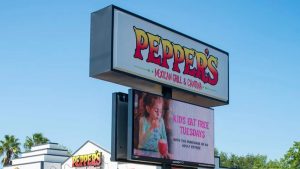
Outdoor LED Signs vs. Traditional Signs
Outdoor LED signs and traditional signs serve different purposes. Many businesses benefit from combining both rather than treating them as direct replacements.
| Sign Type | Best Use | Main Benefit | Main Limitation | Key Consideration |
| Outdoor LED display | Changing offers, events, hours, and announcements | Content can be updated and scheduled | Higher upfront investment and more technical requirements | Confirm code, brightness, electrical, software, and service needs |
| Static monument sign | Property identification and permanent branding | Strong, consistent presence | Message changes require physical updates | Size, materials, landscaping, and viewing angle |
| Channel letter sign | Storefront identification | Clear building-mounted branding | Limited space for changing information | Mounting surface, lighting, electrical access, and code |
| Printed banner | Short campaigns and temporary events | Lower initial cost | Shorter useful life and possible permit limits | Wind exposure, mounting, and appearance |
| Traditional neon sign | Decorative or nostalgic branding | Distinct visual character | Glass tubes may need specialized repair | Weather exposure, transformer access, and installation |
| Digital billboard | Off-premise advertising to a wider audience | Broad reach through rented media space | The business does not own the location or control every placement | Campaign cost, availability, targeting, and message rotation |
An LED display is most useful when the message changes often. A static sign may provide better value when the only goal is permanent identification.
How Can Outdoor LED Signs Improve Customer Engagement?
Outdoor LED signs support customer engagement when each message is timely, relevant, and easy to understand. Roadside viewers may have only a few seconds to read it.
Effective messages usually have:
- One main idea
- Short wording
- Large type
- Strong contrast
- A clear image
- A simple call to action
- Enough display time to read the full message
For example, “Lunch Special Until 2 PM” is easier to process than a long list of menu items, restrictions, prices, and contact details.
A medical office may display “Walk-In Hours Today: 9–4.” A garden center may show “Fall Plants Now Available.” A school may announce “Open House Thursday at 6 PM.”
Each message addresses an immediate reader need. That relevance matters more than filling the display with constant motion.
Keep Motion and Transitions Controlled
Animation can attract attention, but excessive movement can reduce readability. Fast transitions, flashing effects, and crowded sequences may also conflict with local sign rules.
Use motion only when it helps the message. A clean transition between simple layouts often works better than a highly animated design.
Change Content Often Enough to Stay Relevant
A digital display loses value when it runs the same outdated message for months. Businesses should assign responsibility for updating the sign and maintaining an approved content calendar.
Content may change:
- Daily for offers or operating information
- Weekly for events and promotions
- Monthly for seasonal campaigns
- Immediately for closures or urgent updates
Fresh content does not require constant redesign. A library of approved templates can keep updates fast and consistent.
What Is Pixel Pitch, and Why Does It Matter?
Pixel pitch is the distance between the centers of adjacent pixels. A smaller pixel pitch places pixels closer together and can create a more detailed image at shorter viewing distances.
A larger pitch may still work well for a sign viewed from farther away. The right choice depends on the sign’s physical size, typical viewing distance, road speed, content type, and budget.
A business should not automatically buy the smallest available pitch. A higher-resolution display may increase the initial cost without adding useful detail for drivers viewing it from across the road.
A professional site review can help match pixel pitch to real viewing conditions.
Do Outdoor LED Signs Work in Harsh Weather?
Outdoor LED displays are built for exterior use, but reliable performance depends on the complete system. Weather resistance involves more than the LED modules.
The project may need to address:
- Rain
- Wind
- Salt air
- Heat
- Humidity
- Drainage
- Lightning exposure
- Structural loading
- Cabinet ventilation
- Electrical protection
- Service access
These factors carry extra importance in Northwest Florida. Display size, cabinet weight, wind exposure, foundation design, electrical demand, and mounting conditions must be coordinated before installation. Vintage Sign & Light supports these project requirements through sign engineering, manufacturing, permitting support, and professional installation.
Weather resistance does not mean maintenance-free. Owners should follow the manufacturer’s inspection and cleaning guidance and address damaged seals, ventilation problems, electrical faults, or structural concerns promptly.
How Should a Local Business Choose an Outdoor LED Sign?
The best outdoor LED sign fits the property, audience, content, local code, and long-term operating plan. Use the following process before making a decision.

1. Define What the Sign Must Do
List the messages you expect to display. Decide whether the sign will focus on promotions, events, hours, branding, directions, community information, or several of these goals.
A business that changes its message once a year may not need a digital display. A location with daily specials or frequent events may gain more value from dynamic content.
2. Study the Viewing Conditions
Document where viewers will see the sign, how quickly they pass it, and whether they approach by car or on foot.
Consider:
- Road direction
- Traffic speed
- Viewing distance
- Landscaping
- Building position
- Existing signs
- Sun direction
- Nighttime surroundings
- Obstructions
- Property access
3. Review the Sign Code
Confirm what the local authority permits before selecting the final size or display type.
Ask about:
- Allowed sign area
- Sign height
- Setbacks
- Electronic message centers
- Brightness
- Hold times
- Animation
- Transition effects
- Permit drawings
- Electrical requirements
- Engineering documents
4. Match the Display to the Site
Choose pixel pitch, resolution, brightness, cabinet size, and viewing angle based on the actual property.
A display intended for close viewing requires different specifications from a roadside pylon sign seen at higher speeds.
5. Compare Total Cost, Not Just Display Price
Review the total installed project. Include electrical work, permits, structures, software, connectivity, warranty, training, maintenance, financing, and possible future repairs.
The lowest initial cost may not provide the best long-term value if the display lacks support or requires more frequent repairs.
6. Review Software and Content Support
Ask how staff will update the display, schedule messages, preview layouts, manage passwords, and receive training.
The system should fit the people who will operate it. Complicated software can reduce how often the business updates its messages.
7. Confirm Warranty and Service Coverage
Ask for written warranty details. Check the parts term, labor term, exclusions, technical support, diagnostic process, travel charges, and expected procedure when a display problem occurs.
A strong display still needs dependable service after installation.
Which Local Businesses Benefit Most From Outdoor LED Signs?
Outdoor LED signs often provide the most value to businesses that have steady passing traffic and messages that change often.
Strong candidates include:
- Restaurants with daily or seasonal offers
- Retail stores with frequent promotions
- Gas stations that communicate changing prices or services
- Car washes and auto businesses
- Schools with events and schedule changes
- Churches with services and community announcements
- Medical offices with hours and reminders
- Shopping centers with tenant promotions
- Entertainment venues
- Marinas and tourism businesses
- Municipal and community facilities
The display must still fit the site. A business hidden from the road or restricted by a strict sign code may need another signage approach.
Vintage Sign & Light has completed Watchfire digital display projects for businesses, public facilities, and sports venues. Review the Vintage Sign & Light project gallery to see completed installations.

Frequently Asked Questions
Do LED signs use a lot of electricity?
Power use depends on the display size, brightness, content, operating hours, power supply, and automatic controls. LED technology is energy-efficient, but a large, high-brightness digital display can still use significant electricity, so request a project-specific estimate.
Can outdoor LED signs be seen in bright sunlight?
Yes. An outdoor-rated display can remain readable in bright sunlight when its brightness, orientation, contrast, and content design match the site.
Are outdoor LED signs expensive to maintain?
Maintenance costs vary with the product, environment, installation, warranty, and local service access. LED displays can reduce routine lamp replacements, but owners should budget for cleaning, inspections, software support, electrical service, and occasional component repairs.
Do I need a permit for an outdoor LED sign?
Many outdoor LED signs require permits, but requirements differ between cities, counties, property types, and zoning districts. Check the local sign code and permit process before ordering the display or finalizing its size.
Expert Tip
Photograph the proposed sign location in the morning, at noon, near sunset, and after dark. These images help the sign company evaluate direct sunlight, shadows, nighttime surroundings, viewing angles, and possible obstructions before recommending brightness, size, and placement.
Turn Your Outdoor Sign Into an Active Marketing Tool
Outdoor LED signs give local businesses a flexible way to improve visibility, present timely messages, and communicate with passing customers. Their long-term value depends on more than vivid colors or high brightness. The display must fit the property, local sign code, viewing distance, content needs, structure, electrical system, and service plan.
Vintage Sign & Light designs and installs Watchfire digital displays for businesses across the Florida Panhandle. The team can help with display selection, custom sign design, engineering, manufacturing, permitting, installation, and ongoing support.
Request budget pricing to discuss your property, intended messages, and outdoor LED sign options. Vintage Sign & Light offers budget pricing within one business day with no obligation.