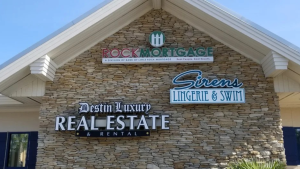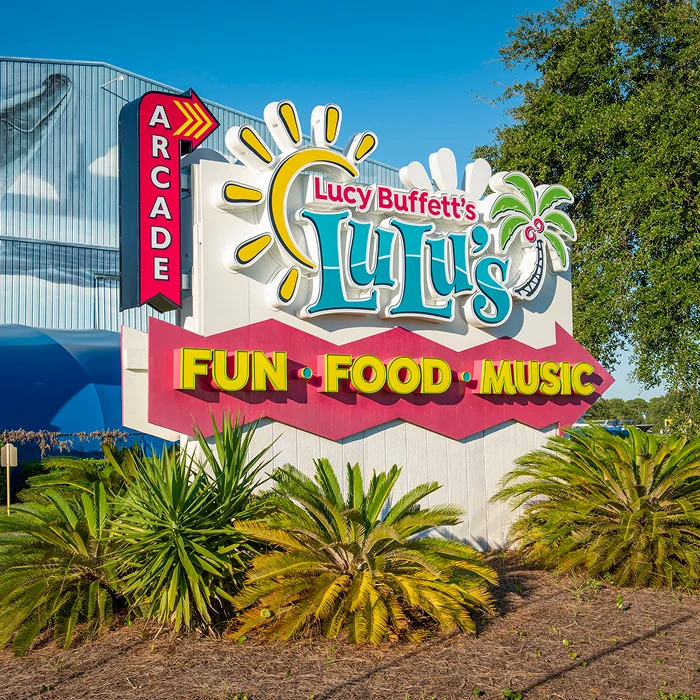


Yes, you can often reuse a monument or pylon sign structure, but only when the existing foundation, supports, cabinet, and other structural components are still suitable for the new design. A retrofit may let you replace sign faces, tenant panels, lighting, finishes, or digital displays without rebuilding everything from the ground up. However, the final decision depends on the structure’s condition, the proposed sign size and weight, local sign codes, electrical requirements, and any engineering needed for the project.
Quick Summary
- An existing monument or pylon structure may be reusable when its foundation and structural components remain suitable for the proposed sign.
- A retrofit can range from replacing tenant panels to rebuilding the cabinet while keeping the original supports or foundation.
- Structural condition, wind-load requirements, local regulations, electrical service, sign dimensions, and installation access all affect the decision.
- A site review is a practical starting point before the new sign is designed around an existing structure that may not meet the needs of the proposed project.
Written by the Vintage Sign & Light Team
We design, manufacture, install, repair, maintain, and improve commercial signs throughout Northwest Florida. Our work includes monument signs, pylon signs, tenant panels, illuminated signs, digital displays, and other commercial signage systems.
What Parts of an Existing Sign Can Sometimes Be Reused?
When we evaluate an existing freestanding sign, we do not treat it as one single component. A monument or pylon sign is a system made up of several parts, and each part can have a different condition.
Depending on the sign, reusable components may include:
- The existing concrete foundation
- Structural steel or support poles
- An aluminum or steel cabinet
- Masonry or architectural elements
- Existing electrical service
- Internal framing
- Serviceable lighting components
- Mounting points
- Tenant-panel framework
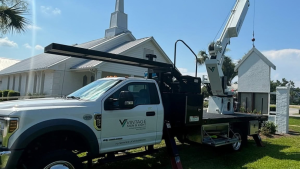
Other components may need replacement even when the main structure remains. For example, a multi-tenant pylon sign may still have suitable poles and foundation while its cabinet, tenant panels, sign faces, and LED illumination need updating. A monument sign may keep its masonry base while receiving a new sign face, architectural finish, routed panels, or electronic message center. That distinction matters because the better question is usually not simply, “Can we keep the old sign?” It is “Which parts of this sign are still suitable for the new project?”
How Do We Decide Whether a Monument or Pylon Sign Can Be Reused?
We start by comparing the condition of the existing sign with what the new sign needs to do. A sign that looks acceptable from the road may still have issues inside its cabinet, around its supports, or within its electrical components. On the other hand, faded graphics or outdated branding do not automatically mean the entire structure has reached the end of its useful life.
1. We Look at the Existing Structure
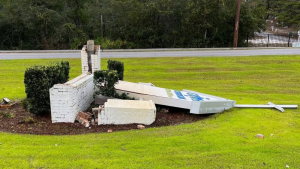
The first step is reviewing the monument, pylon, pole sign, cabinet, supports, and accessible structural components. We look for visible conditions such as corrosion, deterioration, impact damage, loose components, damaged panels, moisture intrusion, or other issues that may affect the proposed work. For pylon signs supported by one or two poles, the visible cabinet is only part of the equation. The support system and foundation also matter because they transfer loads from the sign into the ground.
2. We Compare the Old Sign With the New Design
Reuse becomes more complicated when the proposed sign changes significantly. A new sign face with similar dimensions may place different demands on the existing structure than a larger cabinet, taller sign, or digital display. Changes to overall sign height, sign face area, weight, shape, or mounting can affect the structural design. That means an existing foundation should not automatically be assumed suitable simply because it supported the previous sign.
3. We Review the Foundation
Foundation work can represent a significant part of a freestanding sign installation, which is one reason property owners often want to know whether the existing foundation can stay. Whether it can be reused depends on its condition and whether it remains appropriate for the proposed structure. Available drawings, original engineering documents, prior permits, and information about the existing sign can be especially useful during this review.
4. We Check Electrical and Lighting Requirements
Illuminated monument and pylon signs add another layer to the project. Existing electrical service may sometimes remain useful, but changes to LED illumination, digital displays, internal lighting, or other electrical components can alter the project requirements.
We evaluate the electrical scope as part of the overall sign system rather than assuming the existing wiring or service will automatically work with the new equipment. Vintage Sign & Light also provides commercial sign maintenance and condition review services for existing monument signs, pylon signs, sign cabinets, lighting systems, and digital displays.
Retrofit vs. Replacement: Which Parts Might Stay?
The amount of reuse can vary considerably from one commercial project to another.
| Existing Condition | Possible Approach | What May Stay | What May Change |
| Faded branding but serviceable structure | Reface or refresh | Structure, cabinet, foundation | Graphics, sign face, paint, tenant panels |
| Outdated tenant listings | Tenant-panel update | Main structure and framework | Individual tenant panels |
| Poor or uneven illumination | Lighting retrofit | Cabinet and structural components | Lamps, LEDs, power supplies, related components |
| Rebrand with similar sign dimensions | Sign renovation | Some structure or cabinet components | Faces, logos, colors, dimensional elements |
| New digital display | Partial retrofit | Suitable structure or architectural base | Display, framing, electrical components |
| Damaged or unsuitable support system | Partial or full replacement | Only components confirmed suitable | Supports, foundation, cabinet, or entire sign |
| Major change in sign size or configuration | Engineering review and possible replacement | Project-specific | Structural system, sign face, foundation, electrical |
A retrofit therefore does not always mean replacing only the graphics. Sometimes we keep the foundation but fabricate a new cabinet. In another project, the masonry monument stays while the internal framing, sign face, and lighting change.
When Does Reusing a Monument Sign Make Sense?
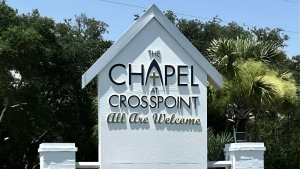
Monument signs are typically lower-profile freestanding signs positioned near entrances, driveways, office parks, residential communities, business parks, and commercial properties.
Their lower position can make them useful for close-range visibility and architectural branding. They may incorporate masonry, fabricated aluminum, dimensional lettering, routed panels, illumination, tenant panels, or digital displays.
Reusing a monument can make sense when the underlying structure still suits the property and the new design.
A Property Is Rebranding
A business may want an entirely different brand presentation without needing an entirely different foundation.
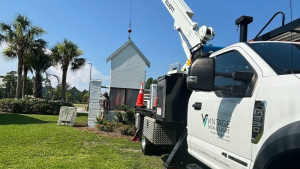
If the basic monument dimensions and location still work, we may be able to redesign portions of the sign around the existing structure. This can include new colors, materials, dimensional lettering, sign faces, or architectural details.
A Multi-Tenant Property Needs New Panels
Shopping centers, office parks, and other multi-tenant properties regularly add, remove, or relocate businesses.
In those situations, the permanent monument structure may stay while tenant panels change. Our retail and multi-tenant signage services include tenant-panel changes, property rebranding, sign renovations, repairs, digital displays, and other coordinated sign updates.
The Sign Needs a Visual Refresh
A monument may still function structurally while its appearance no longer matches the property. Replacing faded faces, updating finishes, repairing worn architectural components, or changing illumination may improve curb appeal and brand identity without automatically requiring a completely new freestanding sign. Our sign improvement services include sign restoration, face replacement, and lighting upgrades for existing signage.
When Can a Pylon Sign Structure Be Reused?
Pylon signs present a different set of considerations because they are typically designed for greater sign height and longer-distance visibility.
These signs are common at shopping centers, gas stations, auto dealerships, hotels, industrial parks, and other properties where passing motorists need to identify a location from farther away.
A pylon may use one or two poles with a cabinet or multiple tenant panels mounted above ground level. Because the structure is elevated, changes to the sign face, cabinet, dimensions, or digital components need to be evaluated carefully.
Reuse may be possible when:
- The existing supports remain suitable for the proposed design
- The foundation can support the planned configuration
- The new sign complies with applicable code requirements
- The cabinet or framing can accept the new sign components
- Existing electrical infrastructure is appropriate for the new scope
- The sign remains properly located for current traffic patterns and visibility goals
A taller existing structure is not automatically an advantage because current local regulations may restrict allowable sign height, area, placement, illumination, or other design characteristics.
Why Wind Load Matters in Northwest Florida
Freestanding outdoor signs in Florida must be planned for more than appearance. Their structural design can be affected by sign dimensions, height, exposure, configuration, location, and applicable wind criteria. The Florida Building Commission identifies the 8th Edition (2023) Florida Building Code as the current edition that took effect on December 31, 2023, and the code uses ASCE 7-22 as a referenced standard for structural loading considerations.
The Florida Building Commission also advises that wind-speed information can be modified by the applicable local jurisdiction, which is another reason site-specific review matters.
For our Northwest Florida projects, we account for applicable project requirements rather than assuming that an older sign automatically meets the requirements for a new configuration.
Can Local Sign Codes Affect Whether You Reuse the Structure?
Yes. Local sign codes can change what is practical even when the physical structure could otherwise be reused.
Municipalities may regulate matters such as:
- Sign height
- Sign area
- Setbacks
- Placement
- Illumination
- Digital displays
- Number of freestanding signs
- Required permitting
- Sight visibility
- Nonconforming existing signs
Requirements also vary between jurisdictions. For example, the City of Destin provides access to its current Land Development Code and directs users to verify ordinances currently in effect. Because local sign provisions can be amended or recodified, the applicable requirements should be checked for the specific property and project before a retrofit is finalized.
That is why we do not recommend designing an entire sign renovation around the existing structure before checking the property, proposed design, and permitting requirements.
Is Reusing the Existing Sign Always Less Expensive?
Not necessarily. Keeping usable components may reduce demolition, fabrication, or foundation work, but cost considerations depend on the condition of the sign and what must be modified.
A retrofit can still involve:
- Site surveys
- Engineering
- Permitting
- Structural modifications
- New sign faces
- Cabinet fabrication
- Electrical work
- LED illumination
- Digital displays
- Equipment rental
- Refinishing
- New tenant panels
- Installation labor
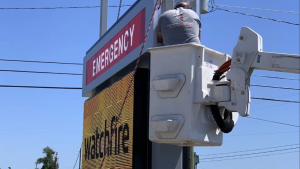
Installation complexity also matters. Work on an elevated pylon sign may require different equipment and access than a ground-level monument.
The best comparison is therefore not simply old sign vs. new sign. It is the cost and practicality of the complete retrofit scope compared with a properly designed replacement.
When Is Full Replacement the Better Approach?
Sometimes keeping the existing sign creates more limitations than value. We may recommend evaluating replacement when the existing structure has substantial deterioration, the new design is significantly different, the foundation is unsuitable, or the current sign no longer provides the visibility the property needs.
Replacement may also make more sense when:
- The desired sign is substantially taller, wider, or heavier
- The property has changed significantly
- Traffic patterns have changed
- The old sign sits in a poor location
- Major structural repairs would be required
- The new brand cannot work effectively within the old dimensions
- Multiple incompatible components would need modification
- Current code requirements prevent the proposed reuse
For example, a business near fast-moving traffic may benefit from greater long-distance visibility than an existing ground-level sign provides. Conversely, a tall pylon may not be the right sign for a property where customers approach slowly and need clear identification at eye level.
The right sign depends on distance, traffic speed, site layout, surrounding buildings, landscaping, and local regulations, not simply on which structure already happens to be there.
Monument Sign vs. Pylon Sign: Does the Existing Type Still Make Sense?
Before investing in a retrofit, we also ask whether the original sign type still fits the property.
| Factor | Monument Sign | Pylon Sign |
| Typical position | Near ground level | Elevated |
| Primary visibility | Close to medium range | Longer distance |
| Common use | Entrances, offices, communities, campuses | Retail centers, highway-oriented properties, larger commercial sites |
| Architectural integration | Often emphasized | Possible, but visibility usually plays a larger role |
| Multi-tenant use | Tenant panels can be incorporated | Common for multiple tenants |
| Best planning factors | Eye-level viewing, landscaping, entrances | Fast-moving traffic, viewing distance, sign height |
Our current monument sign services cover masonry, fabricated, illuminated, and digital monument signs, along with design, engineering coordination, permitting support, fabrication, installation, and service.
What Should You Have Ready Before Requesting a Retrofit Review?
You do not need every engineering detail before contacting us, but a few pieces of information can make the initial conversation more useful.
Prepare:
- The property address: This helps identify the jurisdiction and site conditions.
- Clear photos of the sign: Include the front, back, sides, supports, and surrounding area.
- Approximate dimensions: Note the overall sign and visible face area if known.
- Your proposed changes: Tell us whether you want new branding, tenant panels, illumination, a digital display, or a complete redesign.
- Existing drawings or permits: Original engineering or sign documents may help when available.
- Known problems: Mention corrosion, storm damage, lighting failures, moisture, loose panels, or previous repairs.
- Brand files: Current logos and brand standards help us determine whether the existing sign proportions can accommodate the new identity.
A site review can then help determine which parts may be worth retaining. Vintage Sign & Light’s sign installation process begins with site review and planning before coordination, equipment preparation, and installation.
FAQs
Can you put a digital display into an existing monument sign?
In some cases, yes. The existing monument must have a suitable opening or be capable of modification, and the project must account for structural support, electrical service, display dimensions, service access, and local regulations.
Can you reuse a pylon sign after a business rebrand?
Often, at least part of it may be reusable. The poles, foundation, or cabinet may remain while sign faces, logos, tenant panels, finishes, and illumination change, depending on the condition and new design.
Do I need a permit if I am only changing the sign face?
Permit requirements depend on the jurisdiction and the scope of the change, so a face replacement should not automatically be treated as permit-exempt.
Is a retrofit better than replacing the whole sign?
It depends on how much of the existing sign remains useful. A retrofit can make sense when important structural components are suitable, while replacement may be more practical when major structural, code, visibility, or design changes are required.
Expert Tip
Before approving artwork for a retrofit, have the existing sign measured and reviewed first. Designing the new brand around an assumed opening can create avoidable redesign work if the cabinet, tenant-panel layout, structural supports, or code requirements limit what will actually fit.
Start With the Structure You Already Have
Reusing a monument or pylon sign structure can be a practical option, but the decision should come after the existing sign is evaluated, not before. We look at what can stay, what needs improvement, and whether the proposed design still works for the property, traffic patterns, local regulations, electrical needs, and structural requirements. Sometimes that means a simple face or tenant-panel update. Other projects require a larger renovation or a new sign.
If you have an existing monument or pylon sign in Northwest Florida, send us the property location, photos of the current sign, and what you want to change. We can review the project and help determine the appropriate next step. Request budget pricing from Vintage Sign & Light.