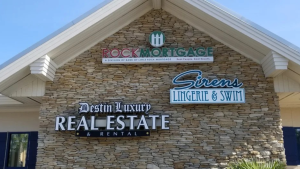


Landlord approval and a city or county sign permit are two different approvals. Landlord approval addresses the property owner’s rules for the building, tenant space, or shopping center. A government sign permit addresses applicable zoning, sign code, structural, electrical, and other regulatory requirements. For a leased commercial property, you may need both before fabrication or installation moves forward.
When we discuss landlord approval vs city sign permits, we recommend treating them as two separate checkpoints rather than assuming one replaces the other.
Quick Summary
- Landlord approval comes from the property owner or manager and is based on lease terms and property sign criteria.
- A city or county permit comes from the applicable government authority and addresses local regulations.
- A landlord can approve a design that still does not meet local code, and a permit does not automatically give a tenant permission under the lease.
- We recommend reviewing property criteria early, then coordinating the required government review before fabrication.
Written by The Vintage Sign & Light Team
At Vintage Sign & Light, we coordinate commercial sign design, site surveys, engineering, permitting, manufacturing, installation, and service throughout Northwest Florida and the Emerald Coast. Our veteran-owned, family-operated company brings more than 50 years of signage expertise, and our work with retail and multi-tenant properties includes coordinating tenant branding, landlord criteria, local sign codes, electrical requirements, permitting, and installation.
This article provides general sign-project planning information. Lease obligations and government requirements vary by property and jurisdiction.

Why Are Landlord Approval and Sign Permits Separate?
They are separate because the landlord and the local government have different authority over the project.
A landlord or property manager controls what a tenant is allowed to do under the lease and the property’s sign program. The local government determines whether the proposed signage complies with applicable laws, codes, zoning rules, and permitting requirements.
The City of Destin illustrates this distinction clearly: its Planning Division explains that property-owner permission does not by itself mean a sign is allowed under the Land Development Code.
| Question | Landlord / Property Manager | City or County |
| Source of authority | Lease and private property requirements | Laws, ordinances, codes, and permit requirements |
| Main focus | Tenant signage and property standards | Regulatory compliance |
| May review | Size, colors, materials, placement, illumination, mounting | Sign area, location, zoning, structural or electrical requirements |
| Can approve the other party’s requirements? | No | No |
| Does its approval automatically replace the other? | Generally, no | Generally, no |
Because the two reviews can cover some of the same design elements, a sign may satisfy one set of rules but not the other.
Which Approval Should You Address First?
As a practical project workflow, we recommend reviewing the landlord’s current sign criteria before developing the final sign design.
That does not mean every jurisdiction legally requires the same sequence. The correct process depends on the property, lease, sign type, and permitting authority.
A useful workflow is:
- Confirm the property and tenant-space requirements. Ask for the current lease provisions, tenant sign criteria, or master sign program.
- Develop the sign concept around those requirements. Account for the available façade, branding, dimensions, illumination, mounting, and existing signage.
- Obtain property approval when required. Keep written documentation of the approved design.
- Prepare the applicable city or county permit documents. This may require drawings, site information, engineering, electrical information, or other documentation.
- Resolve required approvals before fabrication and installation. If either review changes the design, make those changes before manufacturing whenever possible.
Our custom sign design process considers landlord standards, local sign regulations, building restrictions, electrical requirements, and available sign area before a design moves forward.

Does Landlord Approval Mean the Sign Meets Local Code?
No. Landlord approval does not establish that a proposed sign complies with city or county requirements.
A property manager might approve the colors, materials, dimensions, and placement because the design fits the shopping center. The government reviewing authority may still identify a problem with permitted sign area, setbacks, structural documentation, electrical work, or another code requirement.
For example, a landlord could approve illuminated channel letters for a tenant space. If the proposed dimensions or installation details do not meet the applicable local requirements, the design may still need to change before a permit can be issued.
Destin’s official guidance expressly warns that property-owner permission does not make otherwise noncompliant signage permissible under its Land Development Code.

Does a City or County Permit Mean the Landlord Approved the Sign?
No. Government approval generally addresses government requirements; it does not replace the tenant’s obligations to the property owner.
A permit does not automatically change the lease or remove private property restrictions. A tenant could therefore have a proposed sign that is acceptable under local code but is larger, brighter, mounted differently, or made from materials the landlord does not allow.
Property requirements are especially common in shopping centers and multi-tenant developments. Vintage Sign & Light regularly reviews landlord criteria covering sign size, placement, mounting, illumination, and approved materials alongside local sign-code and electrical requirements.
This is why we recommend confirming both approval paths instead of asking only, “Will the city allow this sign?”
What Can a Landlord Require Beyond the Local Sign Code?
A landlord may establish property-specific standards that are more restrictive or simply different from the local government’s minimum requirements.
Depending on the property, tenant sign criteria may address:
- Maximum dimensions for the tenant space
- Designated sign placement
- Letter or logo proportions
- Approved colors
- Materials and finishes
- Raceway or mounting requirements
- Illumination methods
- Sign depth
- Building penetrations
- Coordination with neighboring tenant signs
- Requirements for removing an existing sign
- Procedures for submitting drawings for approval
For example, the local sign code might allow a certain maximum sign area, while the shopping center’s tenant criteria call for a smaller sign to maintain consistency across the façade.
Neither number should be assumed to replace the other. We design around the restrictions that actually apply to the project.
What Can the City or County Require That a Landlord Cannot Waive?
A property owner’s approval does not override applicable requirements imposed by the government authority responsible for the property.
Depending on the jurisdiction and proposed sign, government review may address:
- Zoning district
- Permitted sign type
- Sign area and dimensions
- Sign height
- Proposed location
- Property lines or setbacks
- Existing signage
- Site plans
- Structural drawings or engineering
- Electrical work
- Illumination
- Right-of-way restrictions
- Permit applications
- Required inspections
A useful Northwest Florida example comes from Okaloosa County. Its current Growth Management forms page links to an on-site sign permit guide that calls for items such as proof of property ownership, construction plans, a site plan showing the proposed sign location, sign dimensions and existing sign area, and an approved property-owner Master Sign Plan when applicable.
That is a different type of review from a landlord deciding whether a sign fits a shopping center’s architecture.

What Happens When Brand Standards Conflict With Property Sign Criteria?
When a franchise or multi-location brand has signage standards that conflict with the property rules, we recommend resolving the conflict before the sign reaches fabrication.
For example, a national brand may normally use a particular letter height, illumination style, or mounting system. A specific shopping center may require different proportions, mounting, or lighting.
In that situation, we can work through the project by:
- Comparing the brand standards with the landlord criteria.
- Identifying which elements conflict.
- Determining what can be adjusted while keeping the brand recognizable.
- Preparing a revised sign design for the required approvals.
- Moving toward production after the applicable design requirements are resolved.
Vintage Sign & Light works with franchise and multi-location businesses to adapt signage to individual buildings, landlord criteria, electrical access, local regulations, and placement conditions while preserving the core brand identity.
What Documents Should You Gather Before Starting?
The most useful information is the material that tells us what the property allows, what you want to build, and where it will be installed.
When available, gather:
- Property address
- Relevant lease signage provisions
- Current tenant sign criteria
- Property manager or landlord contact
- Logo and artwork files
- Brand guidelines
- Wide storefront photographs
- Existing-sign photographs
- Proposed sign location
- Site plan, if available
- Building elevation, if available
- Existing sign dimensions
- Known electrical information
- Sign drawings, if already prepared
- Written landlord approval, when required
A sign site survey can also document existing signage, measurements, mounting conditions, electrical access, property conditions, and other field information needed for the project. Vintage notes that site plans, sign drawings, landlord criteria, previous surveys, and property photos can all help guide the survey.
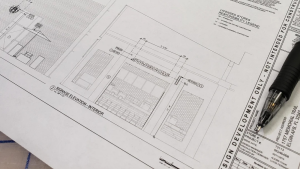
Who Handles Landlord Approval and Sign Permitting?
Responsibility varies from one project to another, so we confirm who is responsible for each approval during project planning.
The people involved may include:
- Business owner or tenant
- Property owner
- Property manager
- Sign company
- Structural engineer
- Electrical contractor
- General contractor
- City or county permitting staff
Vintage can coordinate applicable drawings, engineering information, local permit requirements, electrical planning, manufacturing, and installation when those services are included in the project scope. Our signage project management services are designed to keep those project stages organized.
The tenant or property owner may still need to provide lease documents, property contacts, signatures, landlord approvals, or other information that only they control.
What If the Property Is Outside City Limits?
The phrase “city sign permit” is convenient shorthand, but the actual permitting authority may be a city or a county.
For example, incorporated Destin has its own planning and permitting processes, while Okaloosa County enforces its adopted land-development and building regulations in unincorporated areas. Fort Walton Beach also advises applicants to confirm jurisdiction because a property may have a Fort Walton Beach mailing address but still fall outside the city limits and under Okaloosa County.
That means the property address should be confirmed before anyone relies on a particular city’s sign rules or application forms.
For Northwest Florida projects, we check the applicable jurisdiction rather than treating the Florida Panhandle as one permitting system.
What Approval Mistakes Should You Avoid?
Most approval problems are easier to address before fabrication.
Designing Before Requesting the Tenant Sign Criteria
A design can look excellent and still conflict with the property’s required dimensions, materials, placement, or illumination.
Assuming Landlord Approval Replaces a Permit
It does not establish compliance with applicable local requirements.
Assuming a Permit Replaces Landlord Approval
Government approval does not automatically remove private lease or property restrictions.
Fabricating Before Required Reviews Are Resolved
If the design changes during property or government review, completed components may no longer match the approved project.
Using an Old Sign Program
Tenant criteria can change. Ask the landlord or property manager for the current version rather than relying automatically on an old lease exhibit or file from a previous tenant.
Assuming Rules From Another Location Apply
Sign rules and application requirements can differ between Destin, Fort Walton Beach, unincorporated Okaloosa County, and other Northwest Florida jurisdictions. Current government resources should be checked for the actual project address.
Frequently Asked Questions About Landlord Approval and City Sign Permits
Can My Landlord Reject a Sign That Meets Local Code?
Yes. A landlord or property manager may apply private tenant sign criteria that are more restrictive than local government requirements. Meeting city or county code does not necessarily mean the design satisfies the lease or property sign program.
Can a City or County Approve a Sign My Landlord Does Not Allow?
Yes, those are separate approval questions. A government permit does not automatically give a tenant permission to disregard landlord or property requirements.
Does Every Storefront Sign Need a Permit?
Not necessarily. Permit requirements and exemptions depend on the jurisdiction and sign type; for example, Okaloosa County publishes categories of signs that are exempt from its permitting process. We verify the requirements for the specific property rather than assuming every sign follows the same rule.
Can Landlord Sign Criteria Be Stricter Than Local Sign Rules?
Yes. A property owner may impose private standards for tenants that go beyond what the local government allows as a maximum or minimum requirement. The sign may need to satisfy both sets of requirements when both apply.
Expert Tip
Before we finalize a sign concept for a leased space, ask the property manager for the current tenant sign criteria rather than relying only on a lease exhibit or document from a previous tenant. Confirming the active property requirements early gives the design team a better starting point and can reduce unnecessary redesign.
Coordinate Both Approval Paths Before Fabrication
Landlord approval and government permitting answer different questions. One determines whether your proposed signage fits the property’s private requirements; the other determines whether the project satisfies applicable government rules.
At Vintage Sign & Light, we help businesses, tenants, property managers, and multi-location brands coordinate signage around the actual building, landlord criteria, local requirements, engineering needs, electrical conditions, manufacturing, and installation.
Planning signage for a leased storefront? Send us your property address, storefront photos, logo, and available tenant sign criteria to request budget pricing. We can review the project information and help identify the next steps for design, property coordination, permitting, fabrication, and installation.
If you want a deeper explanation of the government side of the process, review our guide to what a signage permit is and how commercial sign permitting works