

Last updated: August 17, 2026
Custom storefront signs should be designed around both your business and the property where the sign will be installed. We consider your logo, available sign space, viewing distance, customer approach, materials, colors, illumination, mounting conditions, landlord criteria, and local requirements before a design moves toward production.
Customization is more than placing a logo on a standard sign. The goal is to create signage that represents your brand clearly while fitting the building, installation conditions, and way customers actually see the storefront.
Quick Summary
- A custom storefront sign can be tailored through its size, proportions, lettering, colors, materials, illumination, mounting, and placement.
- The building and customer viewing conditions should influence the design just as much as the logo.
- Tenants should review landlord sign criteria and local requirements before finalizing a design.
- Storefront photos, your property address, logo files, and available sign requirements give us a stronger starting point for planning.
Written by The Vintage Sign & Light Team
At Vintage Sign & Light, we design, manufacture, coordinate permitting for, install, repair, and maintain commercial signs throughout Northwest Florida and the Emerald Coast. We are a veteran-owned, family-operated, state-certified electrical sign contractor with more than 50 years of signage expertise.
Our design process accounts for the brand and the physical site. That can include the building, viewing distance, materials, lighting, mounting conditions, electrical access, property requirements, and local sign rules.
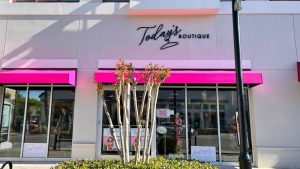
What Makes a Storefront Sign Custom?
A storefront sign becomes truly custom when its design is adapted to the specific business, building, and site rather than produced as a one-size-fits-all display.
Customization may involve:
- Business name and logo
- Letter style and spacing
- Overall sign dimensions
- Shape and proportions
- Brand colors
- Materials and finishes
- Illumination
- Letter or logo depth
- Mounting method
- Placement on the building
- Integration with architectural features
Custom Does Not Just Mean Adding Your Logo
Your logo is important, but it is only one part of the project.
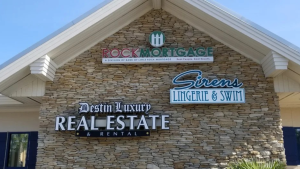
For example, two businesses could use similar channel letters and still require very different designs. One may face a busy street and need to be recognizable from moving traffic. Another may sit inside a shopping center where customers primarily approach from a parking lot.
The available façade, wall material, electrical access, landlord criteria, and viewing direction can change how we translate the same branding into a finished sign.
If you are still comparing the major sign styles available for a storefront, start with our broader guide to storefront signs for businesses.
Why Does Customization Matter for a Storefront?
Customization helps us make the sign fit the conditions in which it will actually be used.
A strong concept on a computer screen may need adjustment once we consider the wall, surrounding architecture, viewing distance, neighboring signage, or installation requirements.
The Sign Needs to Fit the Building
A wide logo may work well across a long fascia but feel crowded on a narrow storefront. We adapt the layout to the available space rather than simply scaling the artwork up or down.
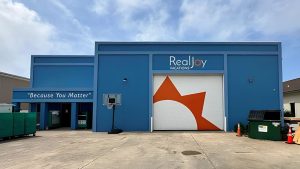
Your Branding Still Needs to Be Recognizable
Custom design should preserve the recognizable parts of your brand while keeping the sign clear at its intended viewing distance. Fine details, spacing, or proportions that work online may need adjustment when translated into physical signage.
The Design Should Reflect How Customers Approach
Where customers first see the storefront matters.
A customer approaching at eye level from a sidewalk experiences the sign differently from someone driving toward the building or moving parallel to it on a busy street. Our sign placement guide explains how viewing distance, traffic direction, obstructions, and customer movement can affect placement decisions.
Property Requirements Can Affect the Design
Tenants do not always have complete freedom over sign size, materials, illumination, colors, or placement.
For retail and multi-tenant properties, Vintage Sign & Light may review tenant brand files, landlord sign criteria, lease requirements, available sign space, mounting conditions, local codes, electrical requirements, viewing distance, and traffic flow.
What Should You Customize on a Storefront Sign?
The most important design choices should work together rather than being selected independently.
| Design Element | What Can Be Customized | Why It Matters | What We Consider |
| Size and proportions | Overall dimensions, letter height, logo scale | Determines how the design fits the available space | Façade, viewing distance, property limits |
| Lettering and logo | Fonts, spacing, logo arrangement, dimensional elements | Keeps branding recognizable and readable | Artwork complexity, distance, fabrication |
| Color and contrast | Face colors, returns, backgrounds, finishes | Helps separate the sign visually from the building | Brand colors, wall color, surrounding conditions |
| Materials and finishes | Aluminum, acrylic, polycarbonate and other approved materials | Affects appearance, fabrication and exterior performance | Sign type, exposure, design, maintenance |
| Illumination | Illuminated or non-illuminated design | Affects identification after dark | Business hours, electrical access, property rules |
| Mounting and placement | Wall mounting, raceway and other approved systems | Connects the design to the actual building | Wall construction, access, electrical needs |
Size and Proportions
A custom size should fit the available sign area and the way the logo is shaped.
Simply making a sign as large as possible does not automatically create a better result. We consider the relationship among letter size, logo proportions, available wall space, viewing distance, and any property or code limitations.
Lettering and Logo Reproduction
Your business name should remain recognizable at the distance where customers need to identify it.
Some logos contain thin strokes, fine details, secondary wording, or unusual shapes that need careful handling during fabrication. We may need to determine which details can be reproduced effectively at the proposed size.
Colors and Contrast
Brand colors should be considered against the actual storefront background.
A color that looks strong on a white page may have much less visual separation when placed against a similar wall color. The building, sign face, letters, surrounding architecture, and lighting conditions all influence the final appearance.
Materials and Finishes
Material selection should support the design and the installation environment.
Vintage Sign & Light’s manufacturing capabilities include metal fabrication, acrylic and polycarbonate components, dimensional letters, graphics, lighting components, finishes, and mounting hardware. Rather than choosing a material only because it looks appealing in a sample, we consider how it fits the sign type, construction, exposure, and maintenance needs.
Illumination
If customers need to identify your storefront after dark, lighting should be part of the design from the beginning.
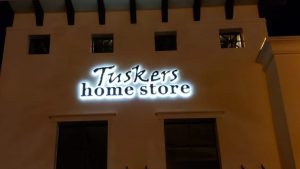
Depending on the sign, that could mean illuminated channel letters, an illuminated cabinet, or a design that works with exterior architectural lighting. Our channel letter sign options provide a closer look at illuminated letter configurations.
Mounting and Placement
A storefront sign ultimately has to connect safely and appropriately to a real building.
Wall construction, existing mounting points, electrical access, architectural features, installation equipment, and available working space can all affect the final approach.
How Do We Adapt a Custom Storefront Sign to Your Property?
We adapt the design to the building, customer viewing conditions, property requirements, and installation environment.
1. Review the Building First
We look at the available façade, proposed sign area, architectural details, mounting surface, existing signs, and electrical conditions.
A professional sign site survey may document the available sign area, building dimensions, mounting surface, existing signage, electrical access, customer sightlines, and installation conditions.
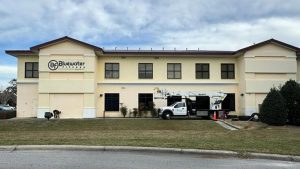
2. Identify Where Customers First See the Storefront
Consider the road, sidewalk, parking lot, shopping-center entrance, and nearby buildings.
For example, a business at the end of a shopping center may be viewed from a sharper angle than a tenant located directly across from the parking entrance. That difference can influence placement and layout.
3. Determine the Necessary Viewing Distance
We consider how far away customers are when they need to recognize the business.
A storefront primarily serving pedestrians can be approached differently from a location that must be identified from vehicle traffic.
4. Decide Whether Nighttime Identification Matters
Restaurants, retail stores, hospitality businesses, gyms, and other businesses operating after dark may need illumination considered early.
For a daytime-focused professional office with suitable exterior lighting, a non-illuminated dimensional sign may be an appropriate direction instead.
5. Review Landlord Criteria
If you lease your location, ask for the current tenant sign criteria before approving a final design.
A property manager may specify dimensions, approved materials, colors, lighting, placement, mounting, or other design requirements. Vintage works with retail and multi-tenant properties where tenant branding must be coordinated with property standards.
6. Check Local Sign Requirements
Local requirements should be reviewed before a sign is finalized for production.
Rules can vary by jurisdiction and may affect dimensions, placement, illumination, structural requirements, and permitting. For projects in Destin, review the city’s current Land Development information rather than relying on older sign-rule summaries.
Structural conditions also vary by location. The Florida Building Commission publishes wind information by county, which is another reason structural and mounting requirements should be evaluated for the specific property.
7. Consider Installation and Future Service
A design should account for how the sign will be manufactured, installed, accessed, and serviced later.
This is one reason our custom sign design work considers fabrication, mounting, lighting, electrical access, local requirements, and the building itself before the project moves forward.
How Should Customization Change for Different Businesses?
The same sign type may need different design priorities depending on the business and property.
Retail Stores
Retail storefront signs often need to balance brand recognition with landlord criteria and surrounding tenant signage.
Restaurants and Hospitality Businesses
Restaurants, cafés, hotels, bars, and hospitality properties may place greater emphasis on evening identification and consistency across multiple signs.
Vintage Sign & Light works with these properties on storefront, building, directional, illuminated, and property identification signage across the Florida Panhandle.
Professional Offices
A professional office may prioritize architectural integration, clear identification, appropriate scale, and a finish that fits the property.
Multi-Tenant Shopping Centers
Tenant branding needs to fit within the larger property system.
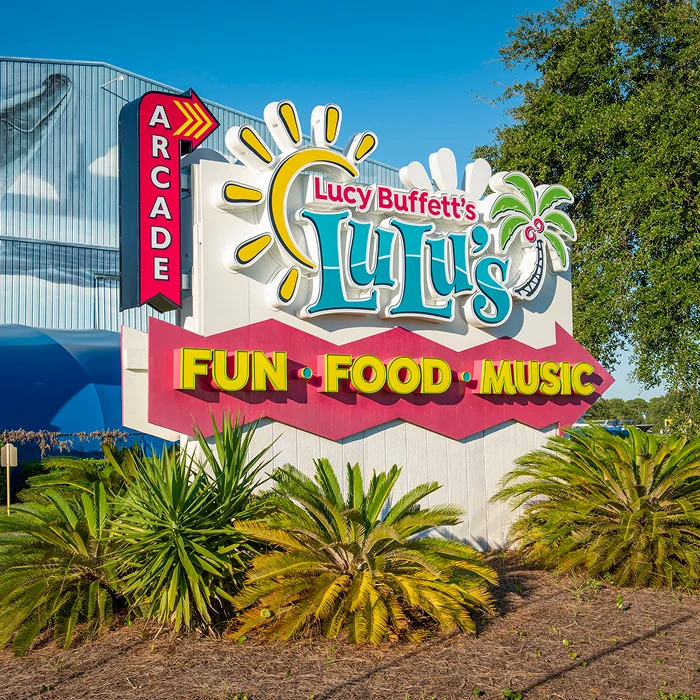
Property managers may need storefront signs, tenant panels, directories, monument or pylon identification, wayfinding, and future tenant replacements coordinated across the site.
Can You Customize an Existing Storefront Sign?
Sometimes an existing cabinet, mounting system, sign face, or structure can be updated rather than completely replaced. We first need to evaluate its condition and determine whether it works with the new branding and current project requirements.
Possible updates may include:
- Replacing sign faces
- Updating a logo or lettering
- Refreshing graphics
- Improving lighting
- Reconfiguring an existing sign
- Updating finishes
- Reusing suitable structural components
Vintage Sign & Light’s sign improvement services include face replacements, lighting upgrades, restoration, and reconfiguration of existing signage.
Reuse is not always the right answer. The existing dimensions may not work with your new logo, components may be damaged, electrical conditions may have changed, or current property and code requirements may affect what can remain.
What Information Do We Need to Start Designing Your Sign?
You do not need to know every production detail before contacting us.
A useful starting package includes:
- Property or job address
- Wide photos of the storefront
- Photos from the road, parking lot, or sidewalk
- Your business name
- Logo or artwork files
- Brand colors or guidelines, if available
- Landlord sign criteria
- Information about existing signs
- Whether nighttime illumination is important
- Building measurements, if available
- Your target opening or renovation timeline
- Any known installation or access restrictions
Vintage Sign & Light’s quote form accepts the job address, installation needs, completion date, artwork status, uploaded files, and additional project information.
If more accurate field information is needed, we can determine whether a site survey should be part of the next step.
What Custom Storefront Sign Mistakes Should You Avoid?
Many avoidable problems begin when the sign is designed before the property conditions are understood.
Designing Before Reviewing the Building
A concept may need major changes if the available wall space, mounting surface, electrical access, or property criteria were never considered.
Making Branding Details Too Difficult to Read
Fine lines, small secondary text, complicated fonts, or crowded artwork may work in other marketing materials but become difficult to understand at storefront viewing distances.
Assuming the Logo Must Be Reproduced Identically at Every Scale
A logo should remain recognizable, but fabrication and viewing distance may require adjustments to fine details, spacing, or proportions. We want to preserve the recognizable parts of your brand while making sure they can be fabricated and read effectively at the intended size.
Selecting Materials Only by Appearance
The material also needs to make sense for the sign construction, installation location, finish, exterior exposure, and future maintenance.
Ignoring Landlord Criteria Until the End
This can lead to avoidable redesign work. If your lease or property has sign standards, include those requirements near the beginning of the project.
Treating Illumination as an Afterthought
Lighting affects electrical requirements, fabrication, mounting, appearance, and potentially local or property approval. Decide early whether nighttime identification is part of the goal.
Frequently Asked Questions About Custom Storefront Signs
How Much Can a Storefront Sign Be Customized?
A storefront sign can be customized in its dimensions, proportions, lettering, logo treatment, colors, materials, finishes, illumination, depth, mounting, and placement. The available options still need to fit the building, sign type, property requirements, and local rules.
Can a Custom Storefront Sign Match My Logo and Brand Colors?
Yes, we can design signage around supplied brand artwork and colors, but the physical sign may require adjustments for fabrication, scale, contrast, or readability. We review how the branding translates to the actual building rather than treating a digital logo file as the final sign design.
Does My Landlord Need to Approve a Custom Storefront Sign?
Your lease or property sign criteria may require landlord or property-management approval. We recommend obtaining those requirements early because they can affect sign size, placement, materials, colors, mounting, and illumination.
Can an Existing Storefront Sign Be Customized for a New Business?
Potentially. We first evaluate the condition, dimensions, structure, mounting, electrical components, and compatibility with the new branding before recommending reuse, modification, or replacement.
Do Custom Storefront Signs Require Permits?
Permit requirements depend on the jurisdiction and proposed sign. We review the applicable requirements for the specific project rather than assuming the same rules apply everywhere in Northwest Florida.
Expert Tip
When you photograph your storefront for a sign project, take at least one close view of the proposed sign area and several wider photos from the places customers actually approach. Those wider views can reveal sightlines, neighboring signs, landscaping, architectural features, traffic direction, and other conditions that are easy to miss in a straight-on building photo.
Plan Your Custom Storefront Sign Around Your Business and Property
A custom storefront sign should represent your brand, but it also needs to work with the building where that brand will live. Size, materials, lettering, illumination, mounting, customer approach, landlord criteria, and local requirements all contribute to the final design.
At Vintage Sign & Light, we plan custom signage around those real project conditions instead of starting with a one-size-fits-all template. Our design, manufacturing, installation, permitting, repair, and service capabilities support businesses and commercial properties throughout Northwest Florida and the Emerald Coast.
If you are planning a new storefront or updating an existing sign, send us your property address, storefront photos, logo, and available project requirements to request a quote. Before finalizing the location, review our guide to choosing the best sign placement for your building.