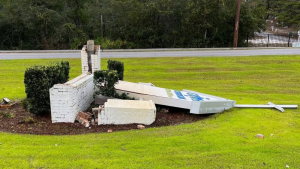


A commercial sign installation company should understand the sign, the property, the mounting conditions, access requirements, electrical scope, and applicable project requirements before installation begins. When we help businesses evaluate an installation project, we recommend looking beyond the total quote. Experience with your sign type, site planning, equipment, engineering and permit coordination, communication, and ongoing service can all matter.
This guide explains what we believe businesses should evaluate before choosing an installer and which questions can help clarify the project scope.

What Should You Look for in a Commercial Sign Installation Company?
The right installer should be able to explain how the sign will be installed at your specific property, not simply tell you that they install signs. Depending on the project, commercial installation can involve:
- Mounting surfaces and attachment points
- Sign dimensions and weight
- Foundations or supporting structures
- Existing signage and removal work
- Electrical components
- Lift or crane access
- Parking or loading restrictions
- Landlord sign criteria
- Engineering documentation
- Permits or inspections
- Final setup and project documentation
A storefront channel-letter system does not have the same installation requirements as a freestanding monument sign, pylon structure, or electronic message display. That is why we start by understanding both the sign and the property.
Does the Installer Have Experience With Your Type of Sign?
Experience should be relevant to the actual project. A company may have years of general construction experience without regularly installing the type of commercial sign you need. We recommend asking for examples involving a similar sign category, such as:
- channel letter signs
- monument signs
- commercial pylon signs
- Watchfire digital displays
- Building-mounted sign cabinets
- Dimensional letters and logos
- Architectural signage
- Interior commercial signs
- Replacement signs using existing structures
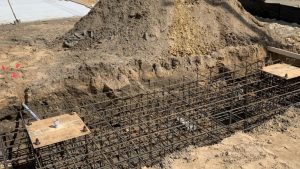
The installation method can change with the sign’s construction, weight, mounting location, electrical requirements, supporting structure, and available access. For example, installing letters on an accessible storefront is very different from positioning a large freestanding sign that requires excavation, foundations, lifting equipment, and electrical coordination.
How Should a Sign Company Evaluate the Property Before Installation?
A qualified installer should gather enough field information to understand the real installation conditions. For many commercial projects, that starts with a site review or survey. Our commercial sign site surveys can document measurements, mounting surfaces, existing signs, electrical access, equipment access, nearby obstructions, and other property conditions that may affect the project.
Before installation is scheduled, we may need to review information such as:
- Property address
- Current site photographs
- Sign drawings and dimensions
- Proposed sign location
- Wall or mounting surface
- Existing supports or foundations
- Electrical availability
- Equipment access
- Existing signs that need removal
- Landscaping or other obstructions
- Tenant or landlord requirements
- Parking and loading restrictions
Not every project needs the same level of field review. A small interior sign may require much less preparation than illuminated channel letters or a freestanding sign structure. The important point is that the amount of planning should match the project. For a deeper explanation of what happens before and during installation, see our guide to how professional sign installation works.
Who Handles Engineering, Permits, and Electrical Requirements?
Responsibility should be clear before fabrication or installation begins. Some projects may involve structural engineering, electrical work, permit documentation, landlord approval, or inspections. The exact requirements depend on the sign, property, jurisdiction, and project scope.
At Vintage Sign & Light, we provide sign engineering coordination when applicable and can coordinate these requirements as part of the broader project.
Engineering and permitting are not the same thing
Engineering documents may address elements such as structural loads, foundations, mounting, electrical conditions, or supporting documentation. A permitting authority separately determines whether submitted work meets the requirements that apply to the project.
The Florida Building Commission publishes statewide building-code resources that businesses and project teams can use when evaluating construction requirements. Local jurisdictions can also have their own sign, zoning, development, and permitting processes, so the property location needs to be confirmed before assumptions are made.
If your business occupies leased property, landlord approval may be another separate step. Our guide to landlord approval vs. city sign permits explains why approval from one party does not automatically replace another required review.
Ask who is responsible for the electrical scope
For illuminated signs and digital displays, clarify questions such as:
- Is power already available at the sign location?
- Who reviews the existing electrical conditions?
- Who provides the final connection?
- Is additional wiring part of the quote?
- Is electrical testing included?
- Will other contractors need to be coordinated?
We prefer to identify these responsibilities before installation day rather than discovering a missing part of the scope after the sign arrives.
How Should You Compare Commercial Sign Installation Quotes?
We recommend comparing what each company is actually providing, not just the number at the bottom of the proposal. A quote that appears less expensive may simply exclude work included in another provider’s scope.
| Item to Compare | Questions to Ask |
| Site review | Are measurements, photos, or a site survey included? |
| Existing sign removal | Who removes and disposes of the current signage? |
| Mounting | Are mounting hardware and attachment work included? |
| Equipment | Are lifts, bucket trucks, or cranes included? |
| Electrical work | What electrical work is included or excluded? |
| Engineering | Who coordinates applicable engineering documents? |
| Permitting | Is permit coordination included? |
| Foundations | Are excavation and structural foundation work included? |
| Travel | Are travel or mobilization costs included? |
| Final setup | Does the scope include testing, cleanup, or documentation? |
| Service afterward | Who handles future repair or maintenance? |
This is especially important when comparing quotes from companies with different business models. A national provider, local sign company, general contractor, and installation-only subcontractor may each define the project scope differently. Rather than assuming one will be cheaper, faster, or more complete, we recommend comparing the responsibilities line by line. For a deeper look at the variables that affect pricing, see our guide to commercial sign installation cost.
What Should You Ask About Installation Equipment and Site Access?
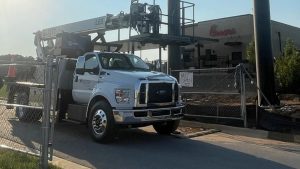
The installer should consider how the crew and equipment will physically reach the sign location. Commercial sign installation may involve aerial lifts, bucket trucks, cranes, ladders, drilling and mounting equipment, electrical testing equipment, or other specialized tools.
The correct equipment depends on factors such as:
- Installation height
- Sign weight
- Building position
- Mounting method
- Parking configuration
- Landscaping
- Overhead obstacles
- Loading areas
- Traffic conditions
- Property operating hours
For example, a wall may be suitable for the sign while the parking lot layout prevents the required lift from reaching that wall. That access issue needs to be identified during planning.
OSHA identifies falls, tip-overs, falling objects, structural failures, and electrical contact among the hazards associated with aerial lifts. Its guidance also states that only trained or authorized workers should operate this equipment.
You do not need to determine the equipment yourself. Instead, ask the installation company how it evaluates equipment needs and work-area access for your property.
What Should You Verify About Licensing and Project Responsibility?
Ask which parts of the job the company performs directly and which services it coordinates with other professionals. The answer may vary depending on the sign and project. Structural work, electrical work, engineering, permitting, and specialized equipment can involve different responsibilities.
In Florida, the Department of Business and Professional Regulation provides a public system for checking licenses for regulated contractors and businesses. Its electrical-contractor information also distinguishes statewide certified licenses from registered licenses that are limited to particular local jurisdictions.
When the project scope requires licensed work, we recommend confirming the applicable credentials instead of relying only on marketing language. Also ask who your main point of contact will be. Larger projects may involve the property manager, landlord, designer, engineer, permitting authority, electrician, fabrication team, and installation crew. A defined sign project management process can help clarify who coordinates those moving parts.
What Questions Should You Ask Before Hiring a Sign Installer?
A short conversation before signing a proposal can reveal whether everyone understands the same project.
We recommend asking:
- Have you installed this type of sign before?
- Do you need a site survey or field measurements?
- What mounting conditions need to be confirmed?
- Who coordinates applicable engineering?
- Who handles permit documentation?
- What electrical work is included?
- What equipment will be needed?
- Is existing sign removal included?
- Are equipment, travel, or mobilization costs included?
- What information do you need from our landlord or property manager?
- What could delay the installation?
- What happens if conditions at the property differ from the original plan?
- What final checks or documentation are included?
- Who can service the sign after installation?
You do not need a technical answer to every detail immediately. You do need to know who is responsible for finding the answer before installation begins.
What Mistakes Should You Avoid When Choosing an Installation Company?
The most common problems often begin with incomplete planning rather than the physical installation itself.
Comparing quotes without comparing scope
A low bid is not automatically a poor choice, and a higher bid is not automatically better. The useful comparison is whether each provider is pricing the same work.
Waiting until installation day to review access
A new awning, construction fence, parked equipment, landscaping change, or blocked loading area can affect access even when the proposed sign location has not changed.
Assuming the installer handles every permit or approval
Some providers offer full permit coordination. Others expect the customer, landlord, contractor, or another party to handle part of the process.
Get that responsibility in writing.
Failing to clarify electrical work
An illuminated sign can be physically mounted while still waiting for electrical work. Ask what needs to be ready before installation and who is responsible for the final connection.
Choosing based only on a broad portfolio
A large gallery can show experience, but we recommend looking for projects similar to yours in sign type, installation conditions, or property type. You can review examples in our commercial sign project gallery.
Should You Consider Repair and Maintenance Support Too?
Yes. We think it is useful to know what happens after the installation is complete. Depending on the sign, future service may involve:
- LED modules or power supplies
- Sign faces
- Tenant panels
- Dimensional lettering
- Electrical components
- Mounting hardware
- Finish deterioration
- Digital-display components
- Storm-related damage
An installation company does not necessarily need to provide every future service itself, but you should understand where support will come from if something needs attention. Vintage Sign & Light provides both commercial sign repair and sign maintenance services in addition to installation.
Choosing a Sign Installation Company in Northwest Florida
For Northwest Florida projects, we recommend choosing a company that evaluates the specific property and jurisdiction rather than applying one blanket process across the region.
Vintage Sign & Light is based in Valparaiso and provides commercial sign installation throughout Northwest Florida. We work with storefront signage, channel letters, monument signs, pylon signs, digital displays, architectural signs, and other commercial sign systems.
Property conditions and project requirements can differ across Okaloosa, Walton, Santa Rosa, Escambia, Bay, Holmes, Jackson, and Washington counties. Site access, landlord requirements, electrical conditions, sign criteria, and local review processes should therefore be evaluated for the actual project. Businesses can review our Northwest Florida service area for additional location information.
Choose an Installer Based on the Whole Project
Choosing a commercial sign installation company is ultimately about understanding who can coordinate the sign with the real conditions at your property. We recommend comparing relevant experience, site planning, scope, equipment, engineering and permit coordination, electrical responsibilities, communication, and post-installation support instead of making the decision from price alone.
At Vintage Sign & Light, we provide commercial sign installation throughout Northwest Florida and coordinate our work around the approved sign, property conditions, access, electrical scope, and applicable project requirements. If you are planning a new sign or replacing existing signage, review our commercial sign installation services or request a quote from Vintage Sign & Light with your property address, photos, sign information, and project details.
FAQs
Should a sign installer visit the property before installation?
Many commercial projects benefit from a site survey or another form of field verification. The level of review depends on the sign, mounting conditions, electrical needs, access, existing structures, and available project information.
Who handles permits for commercial sign installation?
It depends on the provider and project scope. Ask who will coordinate applicable permit applications, engineering documents, landlord requirements, inspections, and supporting information before you approve the proposal.
What should be included in a commercial sign installation quote?
The quote should clearly describe the installation scope and identify applicable removal work, mounting, equipment, electrical work, engineering or permitting coordination, foundations, travel, access requirements, and final setup. Compare exclusions as carefully as inclusions.
Does every commercial sign require the same installation equipment?
No. Equipment depends on the sign’s size, weight, height, mounting method, property layout, and access conditions, so a storefront installation may require very different equipment from a monument or pylon project.